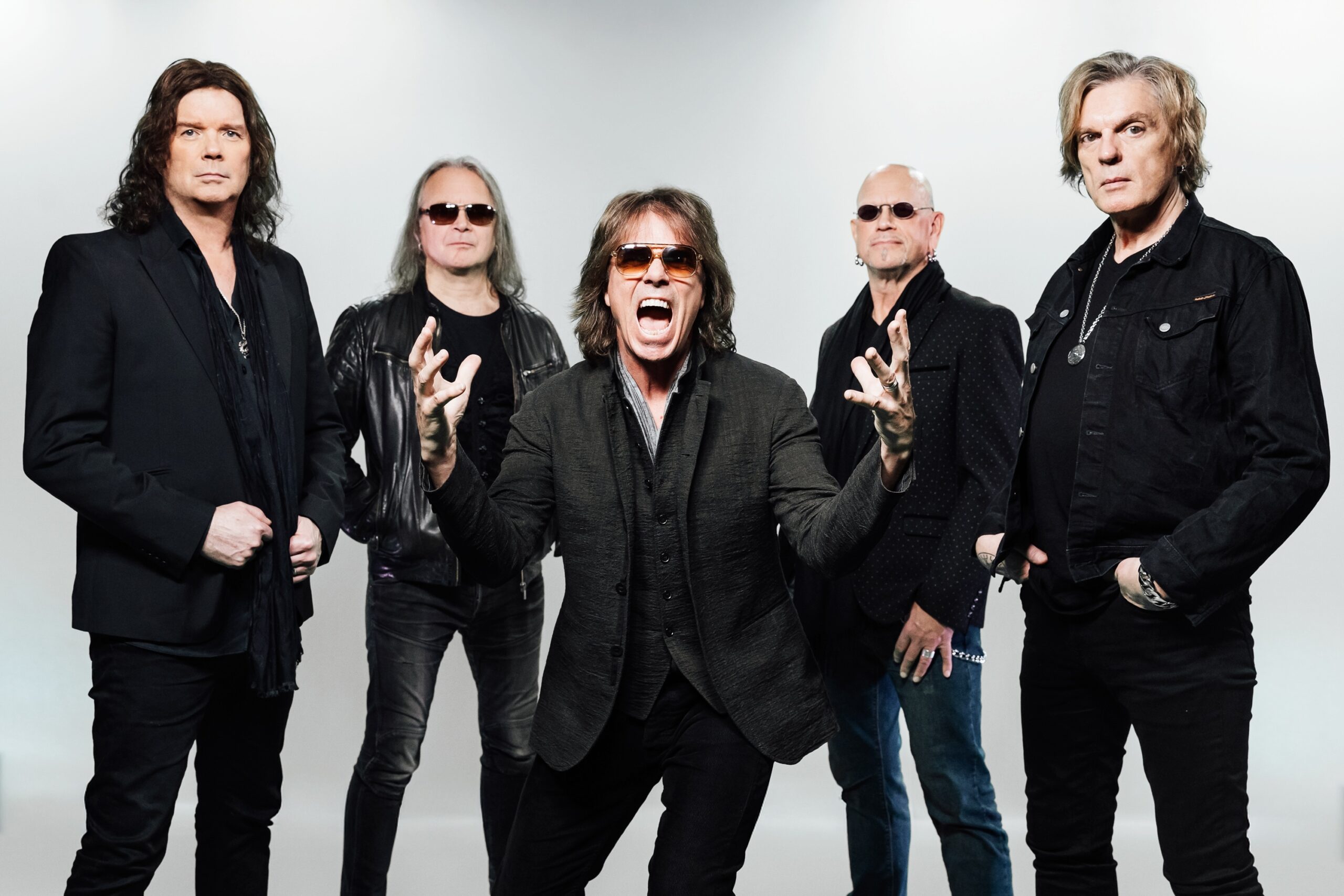
Nine years is a long time to leave a room in silence. It’s long enough for a sound to calcify into nostalgia, for a band’s name to become shorthand for a single song, a single decade. Europe could have let that happen. They didn’t.
Come This Madness, the band’s twelfth studio album, lands September 25 via SilverLining Music/Hell & Back Recordings, and it doesn’t arrive quietly. This is a band that has spent four decades refusing to sit still — reinventing, shedding skin, circling back only to push forward again — and their newest record feels like the sharpest distillation of that restlessness yet. Tracks like “One on One,” “The Cult of Ignorance,” and the title cut “Come This Madness” don’t just showcase a band that’s aged gracefully; they showcase one that’s still hungry, still colliding tension and truth and raw nerve into something that lands as personal as it does massive.
The album’s first signal flare, “One on One,” dropped back on April 28 — a return that didn’t ease listeners in so much as reintroduce a band operating at full, focused power. An orchestral hush opens the track before it cracks into a riff-driven surge, propelled by a bassline that refuses to let up until it detonates into full arena scale. It’s a song the band carried for years before it found its final shape, and that patience shows: this is Europe’s classic instinct fused with something unmistakably present-tense. The accompanying video matched that ambition, trading the expected for the unsettling — a bruised, stripped-down character study anchored by a raw, wordless performance from Peter Stormare (Fargo, The Big Lebowski, Minority Report, 8MM, Armageddon), and it’s since pulled in over 932,000 views.
Then came “The Cult of Ignorance” on June 3 — deceptively hooky, built for singing along, even as its lyrics needle at something more uneasy simmering beneath the surface of modern life. Its video turned into something of an event unto itself: a parade of cameos from Malin Åkerman, tennis legend Stefan Edberg, astronaut Christer Fuglesang, the Hives’ Howlin’ Pelle Almqvist, Opeth’s Mikael Åkerfeldt and Fredrik Åkesson, and E-Type, among a wider cast pulled from music, film, fashion, sport, and science — a clip that’s since crossed 964,000 views.
The record itself took shape at RMV Studio in Stockholm, the space built by Benny and Ludvig Andersson, with Tobias Forge of Ghost and Opeth’s Mikael Åkerfeldt stepping in as guest contributors. Producer Tom Dalgety (Ghost, Rammstein, Pixies, The Cult, Opeth) didn’t just oversee sessions — he embedded himself in the writing and tracking, shaping the album’s DNA from its earliest sketches. Mixing duties fell to Mike Fraser, a name that carries serious weight in rock circles (AC/DC, Van Halen, Metallica, The Cult, Loverboy), brought in to carry the record across the finish line.
Come This Madness finds Europe fully present-tense — not chasing their past, not coasting on it either, but standing in the world as it actually is right now. And they’re not easing into this era quietly: alongside the album rollout, the band is lining up a heavy run of festival dates and, come September 30 in Glasgow, kicking off The Final Countdown 40th Anniversary Tour — a run built to honor the song that made them global while proving the band driving it forward today is very much its own animal. Full tour dates and ticketing details live at www.europetheband.com; the album itself will be available on vinyl, CD, and digital, with pre-orders open now.
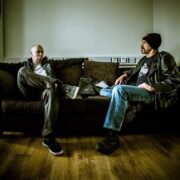
Ahead of all of it, I caught up with the man behind arguably the most iconic keyboard intro in rock history — to talk legacy, the new record, and how a band this far into its story keeps finding reasons to keep going. Mic Michaeli carved out time between rehearsals to sit down with Antihero.
Antihero Magazine: Mic, it’s great to sit down with you. Europe is in one of the most creatively confident phases of its career, and you have been at the heart of that evolution. I’d love to start by going back a little — not to nostalgia, but to the roots of how your musical identity formed. When you look back at your earliest years with the piano, what’s one musical instinct you developed then that still shapes how you play today?
Mic Michaeli: I think it’s constantly evolving, and also no — I think you always, at least for me, and I think for the rest of the guys in the band as well, it’s been a development, and you kind of pick up new things, you learn new things. I mean, some of the chords that we play today, we wouldn’t have played in the ’80s.
Antihero Magazine: That instinct — whatever it is — seems to have carried through your entire journey, even as Europe’s sound shifted dramatically over the decades. When you first stepped into Europe’s world in the mid-80s, your role became not just supportive — it became foundational. By that I mean that your keyboard sound could actually shift the band’s sonic identity. Your keyboard textures have always balanced melody and atmosphere. How consciously did you work on defining your own sound, and how much of it merged naturally through the evolution of the band?
Mic Michaeli: Oh, it’s an interesting question. I never thought about that really, but I guess that — I mean, back in the days when I started in the band in the ’80s, I mainly used sounds that were available at the time in the keyboards that I could afford. And also, playing in a rock band — I mean, I don’t know what genre we are in, but if it’s hard rock, maybe — playing in a hard rock band, I mean the guitar is the main ingredient in the orchestration of the band, or of the instruments. So it’s always interesting to try and find a way to cut through that wall of guitars. And that’s very intriguing, and also it’s something you really have to work on. And for me — sorry, this is a long answer for you — but for me, it’s not important to have a keyboard upfront all the time. I like the guitars, I like the sound of a guitar, so for me it’s more just to find the right places where it fits.
Antihero Magazine: I also think that the sound of Europe as a band has evolved and changed. That evolution is fascinating, especially considering how many stylistic eras the band has travelled through. And actually more so with the recent albums, it’s taken a new direction and gone into completely other areas. There’s some hard rock, there’s bluesy elements. Do you feel that the band’s sound has changed much and evolved since you first started?
Mic Michaeli: I think it has, and I think that’s a nice progression. And we’re on a kind of journey on our own. I’m getting philosophical now. We’re on a journey in our own musical universe, and we like to take turns sometimes — let’s check this out and go the other way, let’s check that out. So sometimes we go for a more bluesier way, and sometimes — I mean, on some songs anyway — you can almost hear prog influences, and sometimes flirting back a little bit with the ’80s when we started. So I think what we’re trying to do is just have fun and explore.
Antihero Magazine: And with each shift, the band’s chemistry changes too — especially your interplay with Joey and John. Across the band’s reunions and reinventions, is there anything that has been a constant theme throughout the history of the band? Something that remains true, something that remains at the core of the band that’s still there to this day?
Mic Michaeli: Well, I would go back to the previous question. I think the thing is that we don’t want to stay in the same area all the time. We do want to explore and try different things. And I think that’s — at least now, and it has been for a long, long time — that we want to. I mean, I admire a band like AC/DC who more or less sounds the same throughout the years, and I think they shouldn’t change. They should go for that. But for us, I think it’s the constant change. But also, if you want to have one thing that’s been sort of the core all through the years, I think it is cool, heavy riffs, but still with nice melodies.
Antihero Magazine: I have personally noticed quite a change in the band’s audience at the live shows, particularly in recent years. It’s definitely become more diverse in its makeup.
Mic Michaeli: Yeah, I know. And we played Wacken in Germany a couple of weeks ago, and we were like, “This is kind of a heavy metal festival. Should we play Carrie? Yeah, fuck it, let’s do it.” And you see these guys with leather and denim, and you know that they’re more into — I don’t know what — but really metalheads. But I think that the Wacken gig that we did went really, really well, because I mean, we played both ballads like Carrie, but also the heavy stuff, as you say, and people were going crazy. It was fantastic. I loved it.
Antihero Magazine: Which leads us nicely onto the new album, which comes out next month. When you guys are creating new songs on an album, do you find that the songwriting process has changed, or is it just a natural chemistry? Because you guys have obviously known each other personally and musically for quite some time.
Mic Michaeli: It’s very much a natural chemistry, but there are different ways that we write. For example, it’s mainly me, Joey, myself, and John Leven, the bass player, that writes the songs these days. And usually it’s like demos or ideas sent back and forth. John has an idea, I have an idea, and we send it to Joey, because in the end it’s really Joey who decides, because he’s going to sing on that — he’s going to do his thing. So he has to feel that this is okay. But that’s one way of working, sending ideas back and forth. But Joey and I, we have a weird kind of way of doing things sometimes. We meet up — whatever, at least if there’s keyboards and a drum set and a microphone — so he sits by the drums, and we just push record on a tape recorder. We just record, and we just jam and do whatever we feel like for two, three hours. And then we listen back to it, and usually — I mean, most of the time — we go, “Oh, what the fuck did we do here?” Because it’s totally random, nothing planned, we just go for it. But sometimes you find a little piece of gold in there that we work on and make something out of. And I mean, it’s an interesting way of working.
Antihero Magazine: Of course, the band are currently rehearsing for the forthcoming live tour. How are the new songs integrating into the set? Do you think any of those new songs will be ready? I understand you’re in the UK soon — I think next week for the Stonedead Festival.
Mic Michaeli: It’s always a lot of fun to play the new songs that you recently recorded, and so yes, those are really cool and turning out really great, and we’re so much looking forward to playing them live. I mean, obviously we can’t do the whole album, but a few good songs we will do on the tour we’re doing this autumn. I think we’re doing the Stonedead Festival — we’re doing two new songs from the album. Yeah, so that’s going to be a lot of fun.
Antihero Magazine: I mean, it’s actually been nine years — I find it very difficult to believe — since the last Europe album. That’s quite a gap between albums.
Mic Michaeli: I know, we’re kind of surprised ourselves. We didn’t realise how much time there was. But I think it was a good thing because we didn’t rush anything. We let things take time. And I mean, for some reason, it seems like we work the best and the hardest when we have a knife at our throats. I mean, now we decided we’re going to go into the studio, so we have to have a few songs ready. And so I think it’s been a good nine years, because I mean, we don’t want to rush anything. And I really feel that these nine years, and the time we took making the album — really, it’s been very beneficial for the songs and for the whole album. And we’re extremely proud of what we have achieved, and really hope that at least a few people out there will like it too.
Antihero Magazine: Do you feel that the band, at the moment, are creatively at its strongest? I mean, because a lot of bands in the 80s had those hits and then the career goes into a decline. But your career as a band has actually gotten better — the band has actually progressed even more from those heady heights of the 80s.
Mic Michaeli: Yeah. We had a hiatus between 1992 and 2004 or something like that. We had a coffee break — a very long coffee break — where we didn’t do much, not within the band anyway. And so when we got back, we had a meeting at my place. So we sat around my kitchen table, and we said, “Maybe we should put the band together again. So what shall we do? Should we go back and just sound like the ’80s and do all that? Or should we do what we feel today?” And we said, “Let’s not go back to the ’80s, let’s just move on and do it.” Imagine there’s been a progression between 1992 and 2004, and we had done records between those years — I mean, we should have progressed and changed. And so we just said, “No, no, no, let’s just do whatever we feel like.” And no record company telling us what to do — we just own everything ourselves and just do whatever we please, and it feels great.
Antihero Magazine: Outside of Europe, you have also worked with other artists — Glenn Hughes, for example. Do you have any current plans to work or create music with other artists?
Mic Michaeli: No, I mean, if we have a break, I’m happy to work with others, and I think it’s very healthy to do that. So yeah, I am doing some songwriting with other people as well. But I mean, Europe is always going to be my priority.
Antihero Magazine: I personally last saw Europe live a few years ago — you were doing a history-of-the-band type thing with no support and playing two sets. Was that fun to do, something that was quite different?
Mic Michaeli: Yeah, that was different. Yeah, that was very different. Yeah, it was good fun. And I mean, we just wanted to do something out of the ordinary, so to speak. So I think that was a very interesting thing to do. And also, we wanted to, in a way, try to get a bit closer to the audience. And also we had a little chat — everyone had to talk a little, one minute or a couple of minutes, with the audience, and just connect a little bit more than just Joey talking. And I think that was very interesting. It really was; it was different. And sometimes you have to stretch yourself to do something other than — I mean, step outside your comfort zone and do something else. And I think that’s what we did, and that was interesting. I don’t know how it was perceived or received, but it was good fun for us.
Antihero Magazine: I guess also it was fun to play some of those deeper old cuts that perhaps the band don’t get to play these days?
Mic Michaeli: Yeah, that was fun too.
Antihero Magazine: Once the album comes out, I assume that the band has a hectic touring schedule lined up?
Mic Michaeli: The plan is to do the European tour. I think the album is out on the 25th of September, and so it’s very close to when we start touring in Europe. We do a combined tour — partly it’s because we released the new album, Cult of Ignorance, but it’s also like a 40th anniversary of the release of The Final Countdown. So that’s for this year. And then next year, the plan is to do Japan and South America. And then, of course, touring Europe and doing festivals during the summer. So that’s what it looks like, for what I know about next year, for sure.
Antihero Magazine: Thanks for chatting to me, Mic. I’ll let you get back to the rehearsals.
Mic Michaeli: Thanks for chatting. Hope to see you at Stonedead Festival. Maybe we can catch up and have a chat now that I know what you look like.