There is a category of album that announces itself not through force but through gravity – records that don’t demand your attention so much as quietly make it impossible to look away. Circadian Promise, the third full-length from Connecticut’s Fires in the Distance, belongs to that category. It is not the album their most devoted fans were expecting. It is something more difficult and, ultimately, more worthwhile than that.
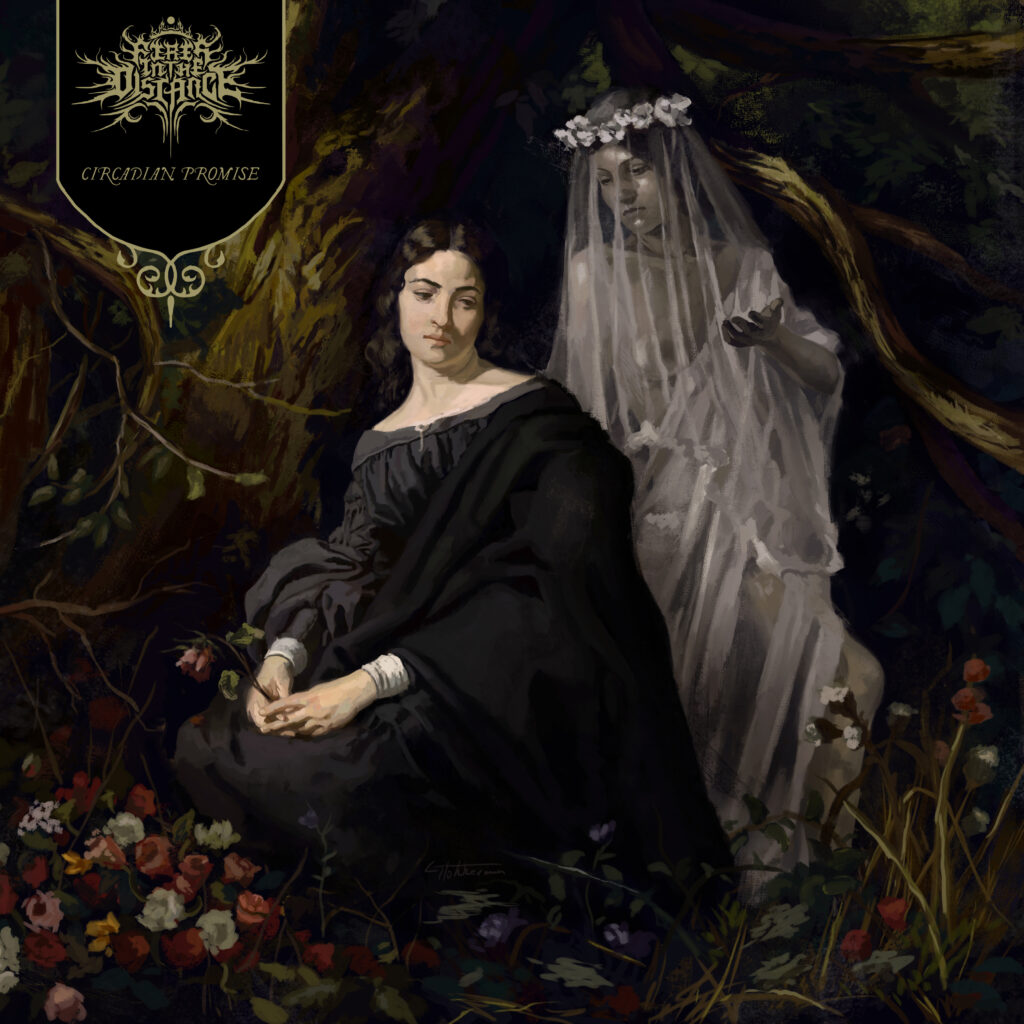
Fires in the Distance arrived with a clear identity: melodic death metal filtered through the doom-laden melancholy and cinematic orchestration of the Scandinavian tradition, but assembled by American hands and anchored in an emotional vocabulary that felt distinctly their own. Echoes From Deep November (2020) introduced the project – originally a solo endeavor by guitarist and primary composer Yegor Savonin – as a serious proposition. Air Not Meant For Us (2023) confirmed it, the synth-driven arrangements and existential lyricism earning the band a genuine following and a spot among the more compelling modern melodeath acts working in this tradition. The question entering Circadian Promise, then, was not whether Fires in the Distance could deliver – but whether they would deliver the same thing again.
They don’t. That choice is the album’s central argument.
The orchestral scaffolding that defined Air Not Meant For Us is still present on Circadian Promise, but it has been repositioned. Strings and synths no longer occupy the foreground; they recede into the architecture, providing tonal weight rather than melodic statement. What fills the space they leave is more expressive lead guitarwork, denser doom influence, and an overall compositional patience that rewards attention. Savonin has spoken in interviews about the album’s core preoccupation – “spiritual death and losing your soul while still living,” and the process of accepting what cannot be changed. That thematic framework maps directly onto the sonic shift: Circadian Promise is a record about stripping away, about learning to live inside what remains. The production choices, made alongside returning producer Dave Kaminsky – who tracked bass and drums together, live, at Power Station New England and his own Studio Wormwood in North Carolina – reinforce this. Orchestration credits go to Randy Slaugh (TesseracT, Devin Townsend), and his work here is notably restrained, lending warmth rather than grandeur. The result has an organic pulse that most modern melodeath records, with their clinically compressed mixes, simply don’t possess.
Opener “Of Radiance and Levitation” is the fullest encapsulation of everything this record is attempting. It builds from shimmering guitar ambience and distant orchestral breath into a melodic payoff that feels genuinely earned – not manufactured. Savonin has attributed the song’s emotional arc to the disorientation of returning from a long tour with Dark Tranquillity and Amorphis, that brief window of normalcy that briefly interrupts depression before the weight reasserts itself. New vocalist Brendan Hayter’s performance in the track’s final third is the record’s most complete vocal moment – serrated growl giving way to fragile, textured clean singing without ever tipping into melodrama. The transition is seamless because it is compositionally motivated, not decorative.
“To You, Author of My Fade” is the album’s most aggressive statement – sharpest riffs, most urgent drumwork, a tension running through its nine minutes that keeps the track feeling kinetic even as it shifts terrain. The outro, in particular, is a sequence that the band’s most attentive listeners will return to: open, searching, unresolved in a way that fits the track’s inward subject matter, the recognition of oneself as one’s greatest obstacle. “Lightless Days of a Songless Bird” is where the compositional ambition lands most clearly – an elegant lead-line dancing above a stripped-down chord progression that gradually accumulates harmonic layers and spills into a cathartic solo. There is a moment around the five-minute mark, where two guitar lines intersect briefly and then diverge, that is worth the price of admission on its own.
The guest appearance of Johan Reinholdz – of Andromeda and, more relevantly, Dark Tranquillity – on “By This Time Tomorrow” carries weight beyond the credit line. The 2024 tour with DT and Amorphis was a legitimizing moment for this band, and Reinholdz’s appearance here functions as a kind of peer endorsement, a Scandinavian melodeath imprimatur granted to a Connecticut group that has clearly done the reading. The track itself is the album’s most concise, and that tighter structure does the album a service – pacing reset after several sprawling compositions, its plainspoken grief and the quiet presence of piano offering something the surrounding tracks don’t.
“Once the Silence Takes Your Place” and closer “Agonal Dreaming” complete the record’s arc with controlled devastation. The former is the album’s emotional center, built around a restrained opening that expands without announcing itself, the clean vocal passages carrying a vulnerability that lands without affectation. The latter doesn’t end in triumph or collapse into despair – it arrives at something closer to peaceful resolution, flurries of guitar and swelling orchestration suggesting acceptance rather than surrender. For an album thematically organized around mortality salience and hard-won calm, it is the correct ending.
There are legitimate tensions worth naming. Fans who came to Fires in the Distance on the strength of Air Not Meant For Us‘s synth-driven sound may find Circadian Promise more austere than they were hoping for. The riffing is genuinely more compact and less melodically distinctive than the band’s previous work – Savonin is composing for structural effect rather than the kind of guitar-line that lodges in the memory independently. And the question of Hayter’s ceiling as a vocalist remains open: his technique is impeccable, his integration of cleans and harsh vocals into the compositional logic of each track genuinely skilled, but one reviewer’s observation that he could benefit from “a little ugly” in his performance is not entirely wrong. There’s a controlled quality to his delivery that occasionally keeps the most emotionally exposed moments at arm’s length.
These are real trade-offs. They are also the price of genuine evolution. Circadian Promise is a more mature, more compositionally sophisticated record than anything Fires in the Distance have made – and the loss of some of Air‘s immediate surface pleasures is what made that growth possible.
Circadian Promise doesn’t ask for your surrender. It asks for your time. Given both, it earns them. “What Fires in the Distance trade in surface immediacy, they more than recover in depth — and depth is what Circadian Promise was always after.”
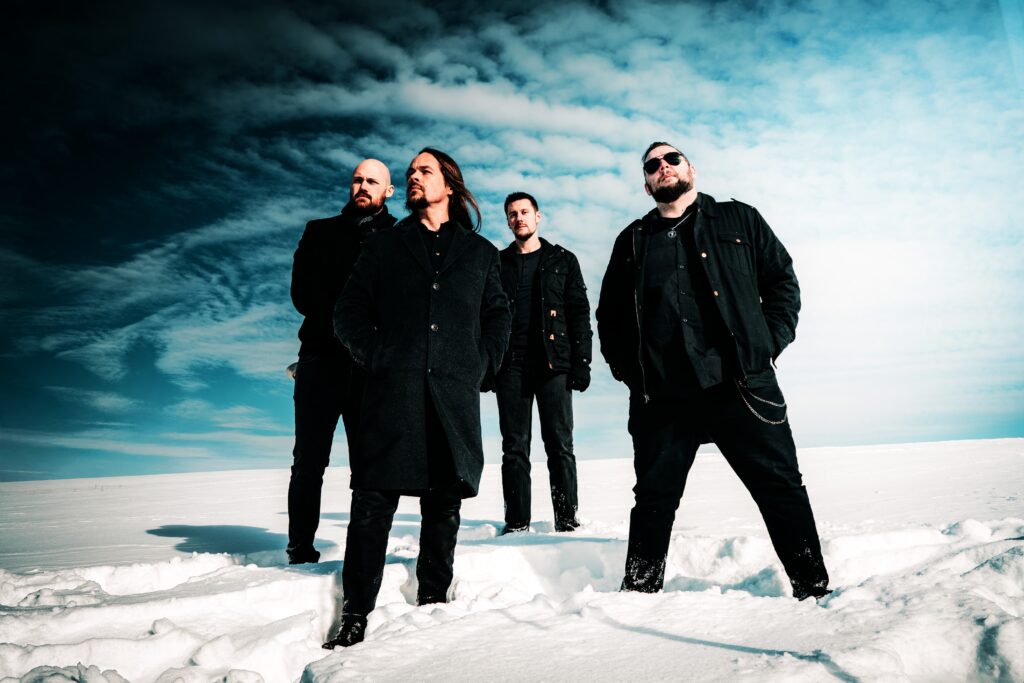
- Yegor Savonin – guitar/lyrics/songwriting
- Brendan Hayter – vocals/guitar/additional lyrics
- Craig Breitsprecher – bass/backing vocals
- Jordan Rippe – drums
For Fans Of: Amorphis, Katatonia, Insomnium, Swallow the Sun, The Man-Eating Tree, Dark Tranquillity, Dawn of Solace
Social Links: Facebook | Instagram | Bandcamp | Spotify | Apple Music
Review
Overall - 8
8
Circadian Promise marks a deliberate and confident evolution for Fires in the Distance — one that trades the synth-driven immediacy of Air Not Meant For Us for compositional depth, stronger doom influence, and a thematic coherence that holds across six sprawling, rewarding tracks. Returning producer Dave Kaminsky and orchestration specialist Randy Slaugh deliver a warmth and organic weight rarely heard in modern melodeath, while new vocalist Brendan Hayter proves a skilled addition, deploying clean and harsh vocals as structural tools rather than mere textural contrast. It demands patience; it repays it.