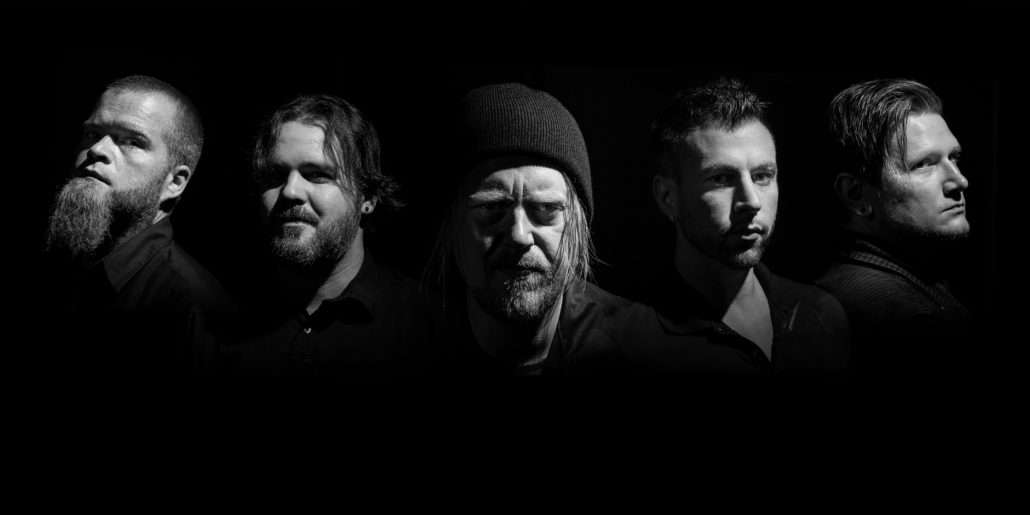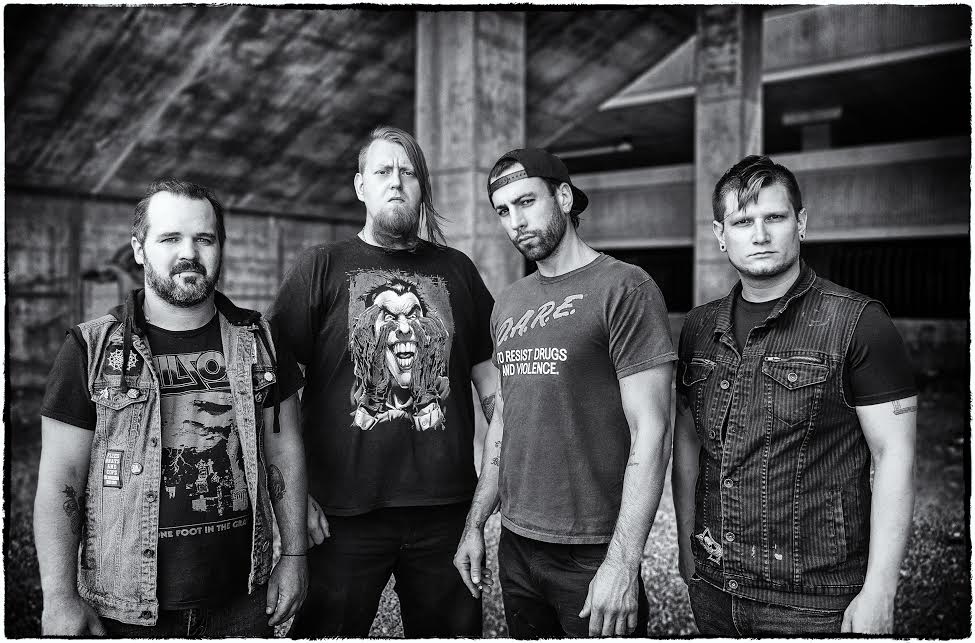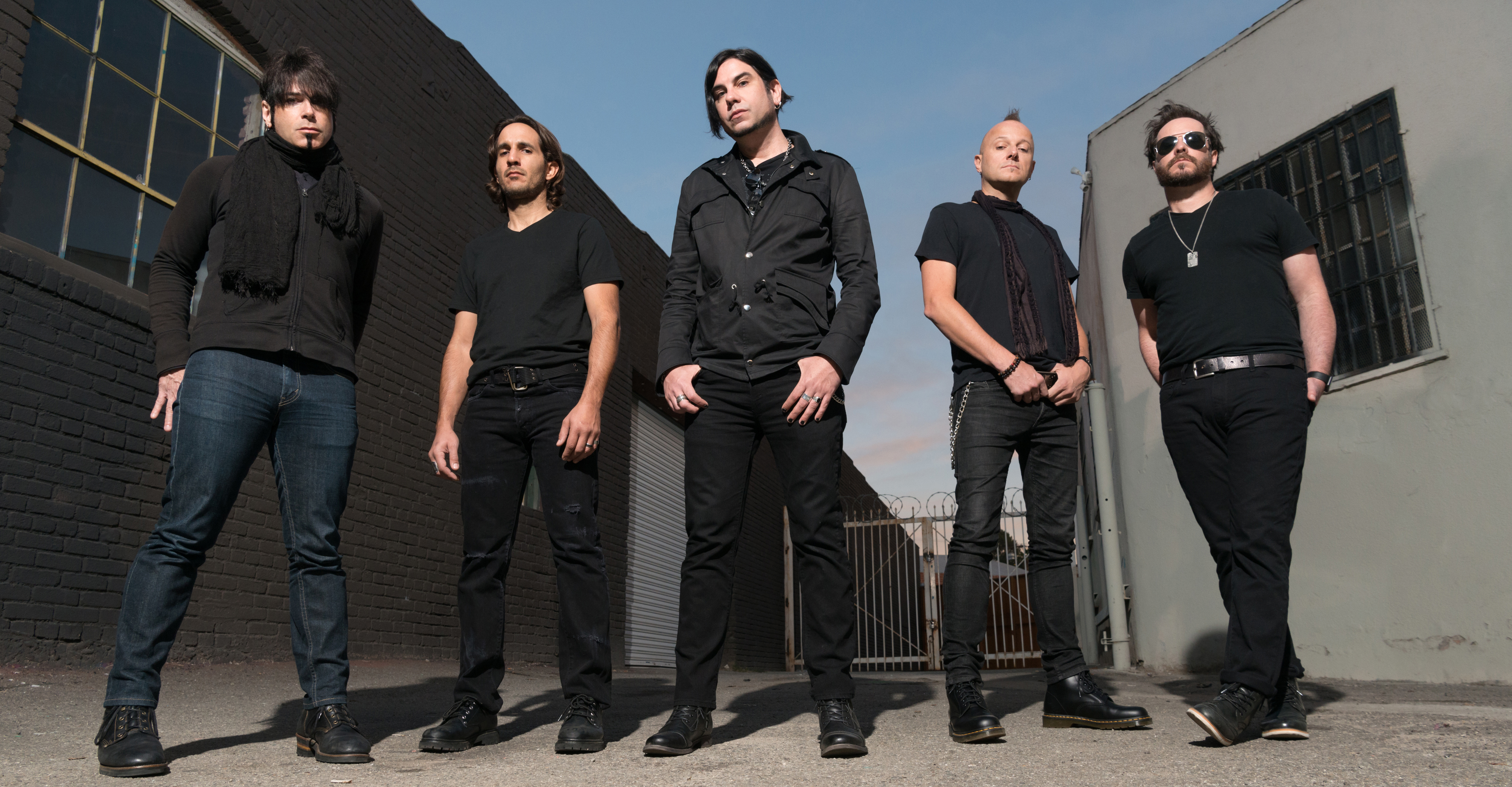
Bassist, songwriter, and producer Phil Soussan has spent over four decades as one of hard rock’s most reliable secret weapons — anchoring records and stages for Ozzy Osbourne, Billy Idol, and Vince Neil, and co-writing “Shot in the Dark,” one of the defining tracks of Ozzy’s solo career. Now signed to BraveWords Records, Soussan is preparing to release his new solo album, Cosmo Fighters, in 2026.
The record was written and recorded in a single, fast stretch — Soussan started in April and had the album finished by November, playing nearly every instrument and handling all the vocals himself. The exceptions: guitarist Richie Kotzen appears on one track, with drummers Carmine Appice and Jay Schellen each featured on a song. Thematically, the album digs into division, chaos, and the double-edged role social media plays in modern life, wrapped in a sound Soussan describes as ranging from production-driven rock to modern metal.
We sat down with Soussan to talk about the songs that shaped his ear growing up in London, what Ozzy taught him about pressure and instinct, his years advocating for musicians’ rights, and how all of it fed into the most personal record of his career.
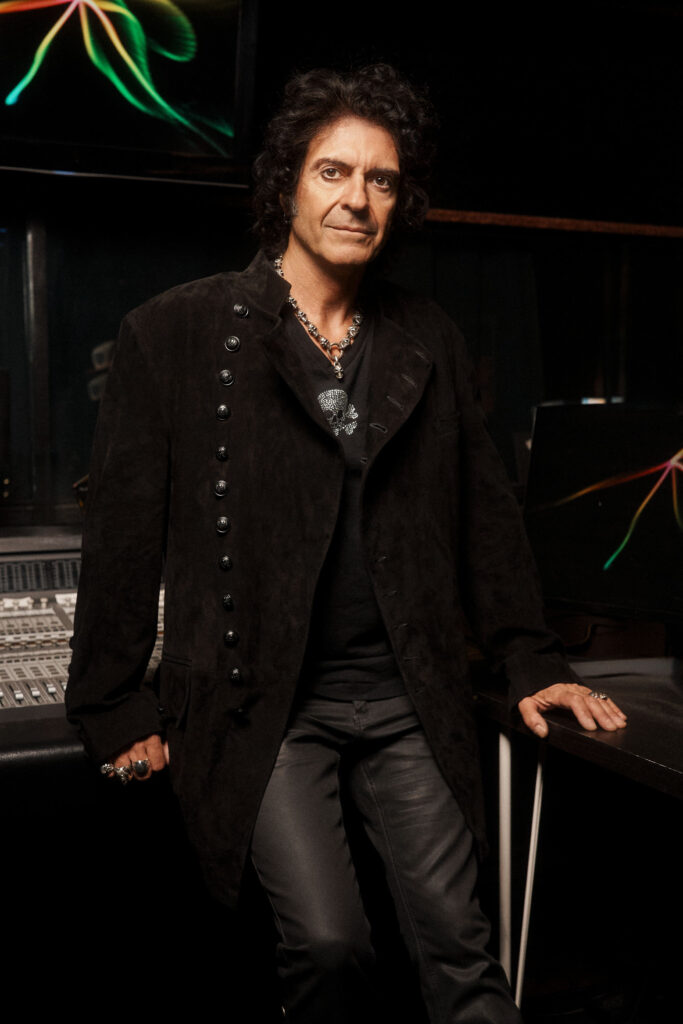
Antihero Magazine: Phil, it’s great to sit down with you. You’ve had one of the most quietly influential careers in rock—bassist, songwriter, producer, collaborator, and now, once again, solo artist with a new EP that feels both reflective and forward-looking. Before we get into the new music, I’d love to trace the arc that brought you here. When you think back to your early years in London, what part of that young musician’s mindset still drives you creatively today?
Phil Soussan: Yeah, so growing up in London, it was an interesting time. We didn’t really have a choice in what we listened to. Like you couldn’t go and pick something off your iPod or go to Spotify. You either bought the record or you listened to a transistor radio, a small AM transistor radio, and waited for your favourite song to come on. The songs that would affect me back then were the songs that were breaking the mould. They were sounding different. Something was different about them. Everything was under the guise or under the category of, 1970s rock, whether it was glam rock or whether it was early classic rock or blues rock or whatever it was. But occasionally a song would come out, and it would just sound different, make your ears perk up. I suppose no better example than the one song that really made me want to be in music, which was the first time I heard Star Man. And that was a song that sounded like no other. And to this day, I’m always trying to find a different way to say something, a different way to play something, a different way to create a new song. A song is a work of art. It’s like a painting, and it’s a complete entity. It has everything built into it, and you want something unique and creatively new. I never really wanted to copy anything. So that’s probably the thread of continuity that goes from listening to creating.
Antihero Magazine: Your arrival in Ozzy Osbourne’s band was a seismic moment. What did stepping into that world teach you about pressure, expectation, and trusting your instincts?
Phil Soussan: My arrival in Ozzy Osbourne’s band was indeed a seismic moment. I learned a lot about pressure, and I learned a lot about trusting my instincts. Very often things would happen so fast that I wouldn’t have a chance to sit there and work out exactly how I was going to respond to a situation that came up instantly, whether that situation was live on stage or off stage or in an interview or at a public appearance or just as happening to be in public. After a while, you do trust your instincts. You figure that you’ve learned how to walk to the bathroom so you don’t have to worry about putting one foot in front of the other, and you have to count on what you think you know. Having said that, I learned a lot. That was probably my greatest learning period of transitioning to that level of music professionalism. Ozzy taught me a lot. He taught me a lot of important lessons about protecting your brand, about protecting your identity, about your stage presence, how you come across to people, and what’s important. So yes, it was a very, very important time for me.
Antihero Magazine: “Shot in the Dark” became a defining song for both you and Ozzy. What personal spark or musical intuition guided you during its creation that still shapes your writing now?
Phil Soussan: So writing that song, I mean, it came about through a lot of things. There was an idea, a lyrical idea. There was a story idea. There was a musical idea. When I think back about what I was listening to, I listened to a lot of jazz fusion, I suppose. So it was things like Return to Forever, and it was Jean-Luc Ponty, and it was even Frank Zappa and the Mothers of Invention, and anything that was really stretching music, musically stretching. And I think that was probably because of my classical background. But one of the types of music I was listening to, obviously through Stanley Clarke, George Duke, those kinds of people, was what today we call yacht rock. And back then, I suppose it would have still been called some form of jazz fusion.
And I remember listening a lot to Al Jarreau, and there were some chord changes which were not typical in rock music, and they were very identifiable as jazz fusion. And I was playing around with those chords, and predominantly they were piano chords. That’s kind of where it started. It was also, I remember, I’d been messing around with a vibe from a David Bowie song. It sounds nothing like it, but it was the song Andy Warhol and there was something about just this transition going between two chords that I remember thinking about. Lyrically, of course, it was a childhood obsession with the Pink Panther. So anything to do with the Pink Panther was pretty cool. And that’s where the title came from, of course. And I loved the whole idea of espionage, and the story was about loyalty, and it was about espionage, and it was about being loyal to one side, but you’re never really sure who it is that you’re being loyal to. And that’s really how the song came about. It still shapes my writing to this very day. Absolutely. There’s always influence from other music and influence from ideas, whether they be thoughts or experiences or sentiments or something psychological. Those are the things that drive me to write a song.
Antihero Magazine: You’ve worked with Billy Idol, Vince Neil, Johnny Hallyday, and so many others—each with a completely different musical DNA. What did moving through those worlds teach you about your own artistic identity?
Phil Soussan: What it taught me about my artistic identity is that music is music, and music comes under many, many different subcategories, as we know. I mean, we’ve got blues, and we’ve got rock, and we’ve got jazz, we’ve got fusion, technical stuff, stuff that’s punk, stuff that’s attitude. All of this comes under music. I don’t think there’s anything I really dislike in music. There are definitely some styles of music I do not relate to, but that doesn’t mean to say that there’s anything wrong with them. I just don’t relate to them. But most music I relate to, and going through and playing with all of these different bands was a real treat for me. There’s nothing like variety being the spice of life, and variety is also the spice of music. I think that I was always very excited when I started to play with a new artist to realise how little I knew about music. When you play with one artist, you start to become very familiar with what you’re doing, and it all becomes extremely comfortable. It’s only when you get out of that safety and into a new style of music that you say, “Oh my gosh, hang on. I can’t just rely on patterns of playing. I’m playing the same patterns and playing this, doing the same things because it’s not going to work. It’s a different type of music. There’s stuff I need to learn.” When I joined Billy Idol, I really started learning about dance grooves because I consider Billy’s music to be more dance-oriented than I consider it to be more rock-oriented, which is a whole different set of lessons when you’re a bass player as to where you place your notes with regards to the drums, with regards to the beats, where you put your accents, how you manage to make that groove work. So there’s lots and lots of stuff to learn. And for me, the more I was learning, the more gratifying it was. So I absolutely loved it.
Antihero Magazine: As a producer, you’ve often been the person who sees the whole picture. How has that wide-angle perspective influenced the way you approach your own music today?
Phil Soussan: As a producer, I’ve been the person who sees the whole picture. How does it affect the way I approach music? Well, I think that’s very true as a producer. I think as a producer, you’re not some kind of magical creature that comes along that has all the answers to everything when no one else has the answers. I think what you have is you have an insight into what each player is trying to do and how they’re trying to approach it. A guitar player is going to have a different set of sentiments than a drummer, than a bass player, or a singer. And once you’ve been doing this for a long time, I think you get a good idea of what everyone’s real hopes and desires are. And within that, you try to help bring that together, bring that big picture together. Imagine one guy draws the outlines, another guy fills in the colours, and another guy does something else, and another guy puts a glaze on it. As a parallel with a painting, everyone wants a great picture at the end of the day, and they want to be gratified in doing the best they possibly can. And it’s up to you, I think, to try to help bring those people together. And that’s what I think the role of a producer is.
Many times I’m producing something. I don’t have the answer, and I don’t know. And it’s not my job to have the answer, but it’s my job to listen and say, “Hey, let’s try this. Let’s all see if it works. And if it works, great. And if it doesn’t work, we’ll try something else.” And that’s really a producer. Another very, very important part of a producer is the ability to make decisions. And it’s one that’s really neglected in today’s world. Many times people come and produce something, and they’ll send it to me and say, “Can you mix this?” And I open the session and there are 25 guitars, and I say, “What’s with the 25 guitars?” Well, we weren’t really sure exactly which one worked better, but we thought we’d leave it in there and that way we could save the decision until some point in the mix. And that’s really sort of passing off the production role to the person who’s mixing. Part of being a producer is being able to cut stuff that absolutely doesn’t bring anything to the party, and making those decisions is important. So you have to have the ability to listen to something and say, “That’s not working. Let’s take this out. It’s not adding. Let’s remove it. Almost minimalistic. This guitar sounds fantastic. We don’t need three other guitars drowning out what it’s trying to do.” Anyway, a little bit about production.
Antihero Magazine: Your bass lines have always carried a melodic sensibility. How did you let that voice evolve on the new EP without repeating familiar territory?
Phil Soussan: I don’t know that it’s a storytelling instrument, but it does have a very important role. I think for me, I rely on a classical mindset, which is often known as figured bass, and it’s the way that a lot of classical music was structured in that the most important things in the music are the melody line and the corresponding bass line. The chords in the middle are very often subject to interpretation in how they’re arranged. I guess it’s not a dissimilar thing from jazz music today. The bass player is holding down a very important bass line. The melody line is always what it is. And in the middle, you’ve got people interpreting chord inversions and progressions and getting very, very creative with that. So to me, the most important part of a song is a melody line, the lyric, and the bassline. And the bassline is supposed to complement the melody line, whether it’s moving in the opposite direction, alongside, in harmony with, or whatever. That’s very, very important. I’ll also hasten to add that it’s not an ideal process. For me, the ideal process is working with someone, and then you can actually work out together what’s working, but we don’t always have that luxury, or that’s not the way it’s put together, so be it.
Antihero Magazine: You’ve collaborated with some of rock’s most distinctive guitarists. How did you approach guitar textures on the new EP—did you lean into those influences or carve out something deliberately new?
Phil Soussan: So, guitar interplay. Oh, collaborating with some of rock’s most distinctive guitarists- how did I approach guitar textures on the new EP? Wow. I don’t know if it came from any particular guitarist. What I do is I’ll find the basic chords. Again, I’ll find that bassline that’s carrying it. I’ll find the melody line, and then I’ll try to strip away as much redundant stuff from the guitars as possible. So if a guitar is just playing a chord for the sake of playing the chord, I’ll take it out. Maybe there’s a little guitar line and a little shape that’s bringing something in, that’s sounding unique, that’s really bringing something to the party. And that’s kind of how I’ll do that. Having said that, it does take me ages. I mean, I spend hours and hours in front of the mixing board trying guitar parts out, recording them and walking away, coming back after a while and having a fresh listen and seeing if it really does justice, if it brings something to the party. And if it doesn’t, I’m not afraid to cut it out and try something else. And that’s the process by which I was writing. I’ll also hasten to add that it’s not an ideal process. For me, the ideal process is working with someone, and then you can actually work out together what’s working, but we don’t always have that luxury, or that’s not the way it’s put together, so be it.
Antihero Magazine: You’ve lived through the analogue grind of the ’80s and the hyper-digital landscape of today. How did those decades of change inform the production choices on this EP?
Phil Soussan: Well, it was done digitally, of course. It’s done what’s called nonlinear recording or DAW. And I don’t think I’ve really done very much linear recording since probably. I don’t know. I mean, analogue probably since the very, very early to mid ’90s. Digital linear recording was the ubiquitous ADAT, which you can’t find anymore. You can’t find an ADAT machine. I actually had some tracks I had to try to unload from an ADAT tape. It took me about a week and a half just to find a machine that I could borrow. So everything has been digital since then. It does have a different way of working as well, but that’s probably a whole other podcast. I mean, I’m not trying to write something that has an industry perspective or that has experience and longevity. One of the things I try to do when I’m working on my solo material is to throw everything out to the side. There’s an expression that says you either lead, or you follow. And I think if you follow, the stuff you’re hearing on the radio has probably been created, who knows, a year, two years, three years, even four years prior. And if you are following stuff, you’re literally going back three or four years. I would rather do something that sounds completely different and set a standard myself. I can take influences from things, for example, a production idea or an arrangement idea, but I don’t want to copy anything. There’s no point. It’s already been done.
Antihero Magazine: Across your career, you’ve been adaptable—but what’s one moment during the making of this EP where you refused to compromise creatively? You’ve also been a strong voice for musicians’ rights and industry reform. Did any of those experiences shape the emotional tone or themes of the new EP?
Phil Soussan: Okay. Oh, musicians’ rights and advocacy. Yes, I have a very strong voice. I was chair of the advocacy committee for the Recording Academy, or the Grammys, for quite some time. I was on the board for two, four, six, eight years. And the last two years I was actually vice president of the Los Angeles chapter. I did go to Washington DC and I did lobby for music rights. It just seems to be like a free-for-all. As there’s new technology that comes along, everyone tries to make it work for themselves. And if you don’t have a voice that’s standing up for the musicians or for anyone, then someone’s going to take advantage of that. In our case, it was streaming music. I mean, 10 years ago, if I mentioned streaming music to you, you wouldn’t have the fair idea what I was talking about, but the concept was already starting to come together, and this was a musical format that never existed. So yeah, we had rights for selling records or cassettes or CDs. We had rights for broadcasting on terrestrial radio, but there were no rights for streaming. And so somebody had to come along and say, “Hold on a second. This is a new technology and we are going to earmark the rights for musicians because if we don’t do it, somebody else will come along and take it away.” And they always do that. We’re always in a love-hate relationship with broadcasters and with streaming services. On the one hand, they do us a favour. Excuse me, I’ll rephrase that. On the one hand, they built their business in a way that helps musicians, but by the same token, we help them. If you took all the music off of radio stations and they ran ads twenty-four seven, I don’t think they’d have too many listeners. So we help each other, and we have to always be respectful to each other and cognizant of how our actions affect the other partner.
Antihero Magazine: What’s one lesson from your time in major-label environments that you consciously rejected while making this new music?
Phil Soussan: Everything? I don’t know. I think it’s an old-world paradigm, the old idea of an old-style record label. It doesn’t work economically. It doesn’t work financially. It didn’t work in any other way. The only thing that I miss about it is that I think it provided a filter. There are tonnes and tonnes of music out there, and a lot of people are too busy creating, so busy, they don’t even listen. Few people listen anymore, and that applies to everyone. Everyone’s too busy creating their own movie clips and whatnot. So there’s an awful lot of crap out there. There’s some amazing music. You just have to sift through an awful lot more. And back in the day, I suppose, the record label did a lot of that filtering for you. It acted as a sort of gatekeeper, not to say that everything that they had was great, and a lot of stuff was unfortunately not able to be heard; by the same token, I think that’s probably the biggest difference.
Antihero Magazine: Was there a moment—on stage, in the studio, or even during a quiet break—when you realised you had something new to say, and it was time to release fresh music under your own name?
Phil Soussan: Oh, you were asking about this new album. I think we talked about that. The creative spark- was there a moment when I realised I had something new to say? This is my third solo album, so I always feel the need to want to write stuff, and very often the stuff I write doesn’t fit within the pigeonhole of whatever I happen to be working with at the time. So sometimes I’ll put those songs to the side, and I’ll say I’ll address them at some point. In this particular case, I literally just sat down and started writing, and I wasn’t sure what to write about. And as I started writing, everything came together very quickly. I looked around, and I found no shortage of subjects. I don’t think we’re living in particularly dull times. So there were lots of things to write about, and that’s pretty much how that all came together. So there’s always a good time to release fresh music under my own name or otherwise.
Antihero Magazine: How has your approach to building harmonic or atmospheric foundations changed from your early songwriting days to the sessions for this EP?
Phil Soussan: How has my songwriting evolved? I think it’s become a lot more focused. At one time, it was always like opening the door to a maze, and then you find yourself in the maze, and you’re trying to get to the centre of where you’ve created the song, and you trial by error: you go this way, you go that way. Now I sort of know what works. For example, if I’m sitting down and I’ve got a bass part that I like, I know the next step is to sit down there and try to find that corresponding melody that works with it. And I can focus on that before I do anything else. It’s not like I’m going to pick up a guitar and start banging away and all of a sudden something magical is going to happen. I’d need to be focused, okay, what melodies work with this bassline? Where does it complement? Where does it need work? And once I’ve got something that’s well structured, now I can concentrate on guitar parts and find out what I’m trying to embellish with the guitar. Most of the time I’m trying to use a guitar to embellish a part of the vocal. So I think you become much more familiar with the process, and it becomes easier to focus on actually accomplishing the songwriting.
Antihero Magazine: Is there a song on the EP that began as something completely different—an idea that surprised you once it found its final form?
Phil Soussan: Probably every single song and probably none of them; every song I started, I think it started in a different direction. One of the ones that took the longest to write was Fading Out was the very first single. I had this bass part, and it was almost like a sequence of bass parts, like you would hear, I don’t know, one of these kinds of modern bands like, I don’t know, Muse or something. Anyway, I had this bass line. It was going round and round in my head, and I couldn’t shake it, and I couldn’t come up with that melody line. I could not. And I almost abandoned it, and it was just all of a sudden, quite by accident, I was singing this melody line, and it sort of worked. So that does happen.
Antihero Magazine: If you had to describe the emotional core of the EP, what feeling or theme sits at its heart from your perspective as both writer and performer?
Phil Soussan: The emotional core of the EP, yeah. So I’m writing about a lot of the dysfunction that is taking place. The whole concept of this is about dysfunction. It’s about how what we thought was going to bring so much positive input to everyone’s lives, to our world, also has a negative, dark side to it. And this hurts a lot of people, and it’s created a lot of division. I think the message is one of respect for the listener. I think we’ve been conditioned to doubt our own intelligence, our own knowledge. We’re pretty smart. We know what’s going on. And sometimes if somebody repeats something over and over and over again, you start believing it, and you start disbelieving yourself. I want people to have confidence in their intelligence. We’re very, very smart creatures. We only use a fraction of our brains. We know; we have gut feelings; we know, we know our intuition. I would like that to be the message of the album: hey, have confidence in yourself. You are intelligent. You are the most important person, and realise what is good and what is positive and what you bring to your life. Your life is an aggregate of positive actions and positive thoughts, not of negative thoughts, not of destruction. At the end of the day, when you go to sleep at night or when you finally fade away, those are the things that are going to mean most to you. That’s the greatest legacy you can leave, is to make a difference to other people’s lives. I know that might sound a little heavy, but that’s honestly what I think.
Antihero Magazine: Which track feels like the clearest snapshot of where you are in life right now, rather than a reflection of your history?
Phil Soussan: The most personal song, probably the one you take, which is going to be the next single. I don’t like talking about what songs are about because I like people to draw their own conclusions and have a listen, but the essence of it is that you always want to do great things for people who appreciate it, and you also want to appreciate when other people do great things for you. I think that really sums up the whole album.
Antihero Magazine: You’ve spent years helping other artists realise their vision. What was the most liberating part of presenting a body of work that begins and ends with your own creative fingerprint?
Phil Soussan: That’s pretty easy. When somebody turns around to you and says, “Oh my gosh, that song means so much to me. I really related to it. It helped me. It helped me understand something. It helped me feel better. It helped me. It helped me. I was going through a tough time.” That’s really where I feel like I’ve written a successful song, not on chart position, just that somebody comes up and says something like that. You have no idea.
Antihero Magazine: Which new song do you think will transform the most when played live, and what role do you see your bass and arrangements taking in that shift?
Phil Soussan: I have no idea. I’ve done some shows with this. It’s really wonderful because the songs that sort of build their spirit are the songs that prove to me that they were correctly written. And there are probably three or four on this record that jumped to mind. Of course, there’s Fading Out. There’s The More You Take. There’s Bluebird. There are some other titles which you won’t know about just yet, but there are a good four or five songs in there.
Antihero Magazine: As someone who’s contributed to so many iconic chapters in rock, how do you balance honouring your legacy with the need to keep your music evolving?
Phil Soussan: I think it’s the same thing, isn’t it? When I look at my career, I don’t think that looking at my career was ever an absolute moment. Like somebody might say, “Oh, all of a sudden at this particular time, on this particular date, I actually made it. That’s it. I became a successful person. I accomplished what I wanted to accomplish.” I don’t think it’s that. I think it’s a retrospective thing. Somebody says something like, “We have an interview here,” and then for a minute you pause, and you look back, and you say, “Wow, this led to that, that led to that, that led to something else, and I guess I’ve had a successful career.” So I think it’s definitely retrospective, and that really is the legacy. The legacy is to try to leave a great body of work that inspires people. I mean, the work itself isn’t the legacy; it’s the inspiration that I hope would be the legacy.
Antihero Magazine: For listeners who only know you from your work with major rock icons, what do you hope they discover about you when they hear this new EP?
Phil Soussan: I hope that they discover in my new EP that a trip, a journey into my head, that it’s very varied, that I don’t just think in one plane or one facet, but it really does go and cross over all kinds of different things. I’m imaginative. I’m spiritual. I love stories. I love personalities. I love speaking with people. I love connecting and relating with people. And all of those things all sort of come together as well, as well as storytelling. I love telling parables. You know what a parable is, right? So it’s an experience that you have, and then you tell a parallel story, which sounds like a random story, but it really has a moral to the story. It has a tale, and it’s for other people to identify what that tale is. There’s a brilliant song which is going to be on a subsequent release, of course. Cosmo Fighter Part One does have a part two, and it will have a part three. So it’s a trilogy. There’s going to be three of them. There’s a song called Hawks and Heroes, which I absolutely love. I’m not going to say anything about it, but it’s one of those parable stories. So, with that having been said, it’s been a pleasure speaking with you and having this interview, and I hope to connect with you again sometime soon. And thanks to everybody for listening. That’s it. Please reach out if there’s anything else I can let you know. Otherwise, have a great day and see you out there on the road somewhere.