Black metal has always been a music of place. Its most canonical recordings carry geography in their DNA – the frozen Oslo suburbs in Burzum‘s static hiss, the Norwegian coastline in early Enslaved, the Carpathian highlands bleeding through Mgła‘s philosophical nihilism. Place is not a backdrop. It is an instrument. It shapes not only what black metal sounds like but what it means, what it is permitted to claim, and who is permitted to claim it.
This is the problem – and the opportunity – facing American black metal in 2026. The United States is not Norway. It is not Poland. It carries none of the ideological cohesion, the geographic severity, or the cultural insularity that gave second-wave black metal its sense of existential necessity. American practitioners have historically been dismissed for exactly this reason: the music imported without the soil it grew from, a borrowed darkness wearing someone else’s face.
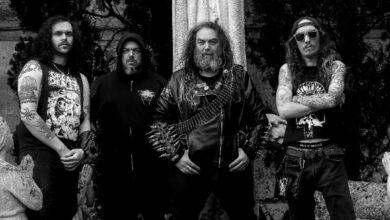
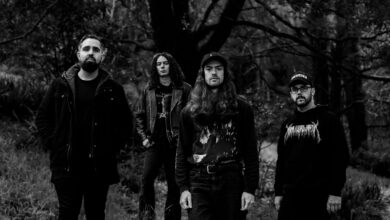
Two projects have done more than any others in recent years to challenge that dismissal: UADA, the Portland, Oregon-based quartet whose aesthetic rigor has earned genuine respect from a scene notoriously hostile to outsiders, and Blackbraid, the one-man project of Jon Krieger – known by his Mohawk-derived name Sgah’gahsowáh – whose debut records arrived with a cultural weight that the genre had never quite encountered before. Neither band sounds like the other. Neither arrived at credibility through the same door. But together they constitute something important – a genuine argument for what American black metal can be when it stops apologizing for where it comes from.
The Mask and the Face
UADA emerged in 2016 with Devoid of Light, a debut that announced itself with the confidence of a band that had studied the canon obsessively and synthesized it without reverence becoming pastiche. The tremolo melodicism, the mid-paced glacial momentum, the layered guitar architecture – all firmly within second-wave tradition, yet assembled with enough compositional intelligence to feel like a genuine contribution rather than imitation. Cult of a Dying Sun in 2018 deepened the formula. Djinn in 2020 expanded it into something more sprawling and ambitious.
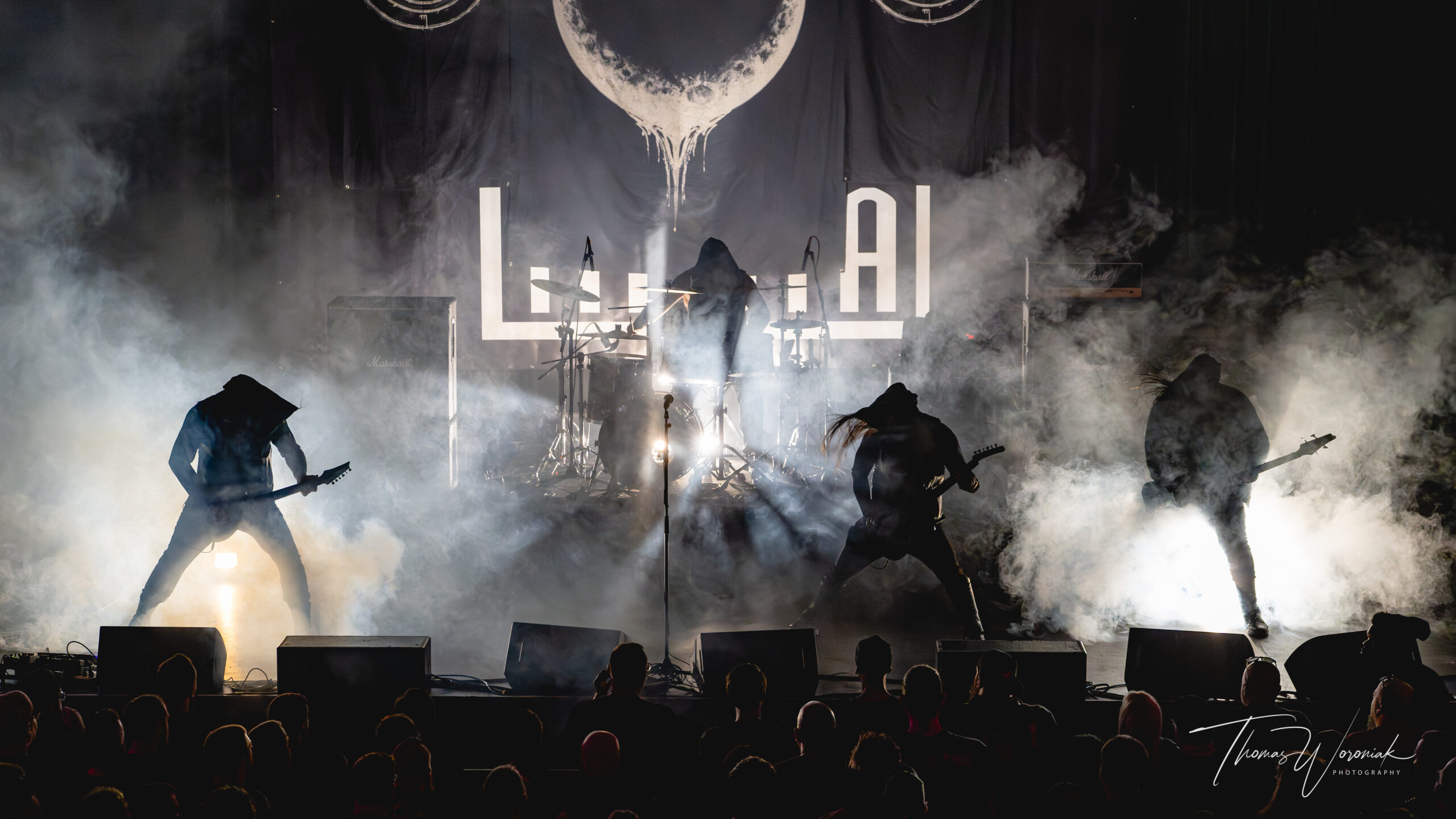
What UADA understood, perhaps instinctively, is that black metal credibility in the European tradition is inseparable from mystique. The genre was built on anonymity, on pseudonym and corpse paint, on the deliberate erasure of biography in service of something larger and more elemental. UADA‘s early resistance to interviews, their masked live presentation, their dense conceptual frameworks – these were not affectation. They were fluency. The band spoke the language of black metal not just musically but philosophically, understanding that the music demands a certain self-abnegation, a willingness to disappear into the art.
This is a particular kind of American response to the problem of place: transcend geography by transcending self. If the Pacific Northwest cannot provide the ideological weight of Scandinavia, UADA suggests, then the individual voice can be subsumed into something archetypal and universal. The darkness they invoke is not specifically American. It is not specifically anything. It aspires to the condition of myth.
It works. Devoid of Light holds up alongside contemporary European releases not as an approximation but as a peer. That is a genuinely rare achievement.
The Name and the Land
Blackbraid arrives at the same problem from the opposite direction – and reaches a conclusion that is almost the philosophical inverse of UADA‘s.
Where UADA dissolves the self into archetype, Blackbraid insists on radical specificity. Krieger has been deliberate about how he frames that specificity. He has lived deeply in the Adirondack wilderness of upstate New York – hunting, fishing, tanning hides, connected to the land on what he describes as both a spiritual and everyday level. His pseudonym Sgah’gahsowáh is a Mohawk name, taken to honor the people of the land he inhabits and draws from, not to claim a lineage that isn’t his. That distinction matters, and his willingness to articulate it openly reflects the same honesty that defines the music itself.
What Blackbraid foregrounds is not tribal identity as credential but land as lived reality. Blackbraid I (2022) and Blackbraid II (2023) are records rooted in the Adirondacks – its forests, its waters, its spiritual weight – and in the Indigenous histories that saturate that landscape whether acknowledged or not. The acoustic passages that punctuate both albums are not genre ornamentation; they are invocations of a relationship to place that predates black metal by centuries.
This is where Blackbraid‘s approach demands careful engagement – not as political statement to be endorsed or debated, but as artistic framework to be understood on its own terms. The project is not using black metal to make an argument about colonialism, though that history is present in every note. It is using black metal because the genre’s formal vocabulary – the tremolo as sustained grief, the blastbeat as forward momentum against oblivion, the rawness as refusal of polish – maps with uncomfortable precision onto what it means to carry the weight of a contested landscape through a living body.
That is not a borrowed darkness. That is darkness earned through inhabitation.
The result is music that feels genuinely necessary in a way that even excellent genre exercises do not. Blackbraid I arrived with significant mainstream press attention – Pitchfork coverage, widespread social media momentum – and the underground’s instinct was, predictably, suspicion. Popularity is always treated as evidence of compromise in kvlt circles. But the suspicion misreads what is actually happening. Blackbraid did not court that audience. That audience recognized something real and moved toward it.
Geography as Thesis
Set the two projects side by side, and a productive tension emerges. Both are working in recognizably similar sonic territory – melodic, atmospheric black metal with strong compositional craft and an emphasis on emotional weight over technical brutality. Both have earned genuine respect from a scene that dispenses it grudgingly. Both are making a case, implicitly or explicitly, that American black metal has something to say.
But the methods could not be more different. UADA‘s geography is internal – the Pacific Northwest provides mood and atmosphere, a certain grey dampness in the production values, but the project ultimately transcends location in pursuit of universality. Blackbraid‘s geography is the entire point. Remove the Adirondack wilderness, remove the Indigenous histories soaked into that land, and there is no Blackbraid – not because the music would be lesser, but because it would be a different project entirely. The land is load-bearing.
This distinction illuminates an important aspect of what American black metal has been missing. The genre’s European giants derive their power not just from sonic vocabulary but from rootedness – Mgła‘s Kraków, Burzum‘s Bergen, Drudkh‘s Ukrainian forests and river valleys. The place is not incidental. It is the source of conviction, the reason the darkness feels earned rather than performed.
American black metal has historically struggled to find an equivalent rootedness. The country is too large, too diverse, too ideologically incoherent to provide the kind of unified cultural pressure that generated second-wave black metal’s sense of necessity. UADA‘s solution – reach past geography toward archetype – is elegant and largely successful. But Blackbraid‘s solution may ultimately be more generative: not transcending American complexity but descending into it, finding in the continent’s specific, layered, often violent histories the kind of darkness that black metal was built to carry.
What Comes Next
The most interesting question facing American black metal in 2026 is not whether it can match its European counterparts. That question has already been answered – UADA and Blackbraid have answered it. The question is what it will do with the freedom that the answer provides.
The genre is at an inflection point globally. Black metal’s founding ideologies have curdled in predictable ways; the Norwegian scene’s political associations have become an embarrassment that serious artists in the tradition are actively working to separate themselves from. Mgła and Furia represent a European black metal that has largely shed those associations in favor of something more philosophically rigorous and culturally specific. The space for American black metal to define its own terms has never been more open.
UADA and Blackbraid suggest two viable paths forward. The first: master the tradition so completely that geography becomes irrelevant, and let the music speak in a language that transcends origin. The second: abandon the pretense of transcendence entirely and go deeper into the specific American experience – its landscapes, its histories, its wounds – and trust that specificity is its own form of universality.
Neither path excludes the other. The most exciting possibility is that the next generation of American black metal artists learns from both – the craft discipline of UADA, the cultural courage of Blackbraid – and finds a third way that neither has yet imagined.
Black metal has always been a music of place. America, for all its contradictions, has no shortage of places. It has forests and deserts and coastlines and histories dark enough to sustain a thousand records. The question is whether its artists are willing to go there honestly – without borrowed darkness, without European permission, without apology.
UADA and Blackbraid have shown that they are. The argument for American black metal’s future starts with them.
Thomas Woroniak is Senior Staff Writer and Photography Editor at Antihero Magazine.