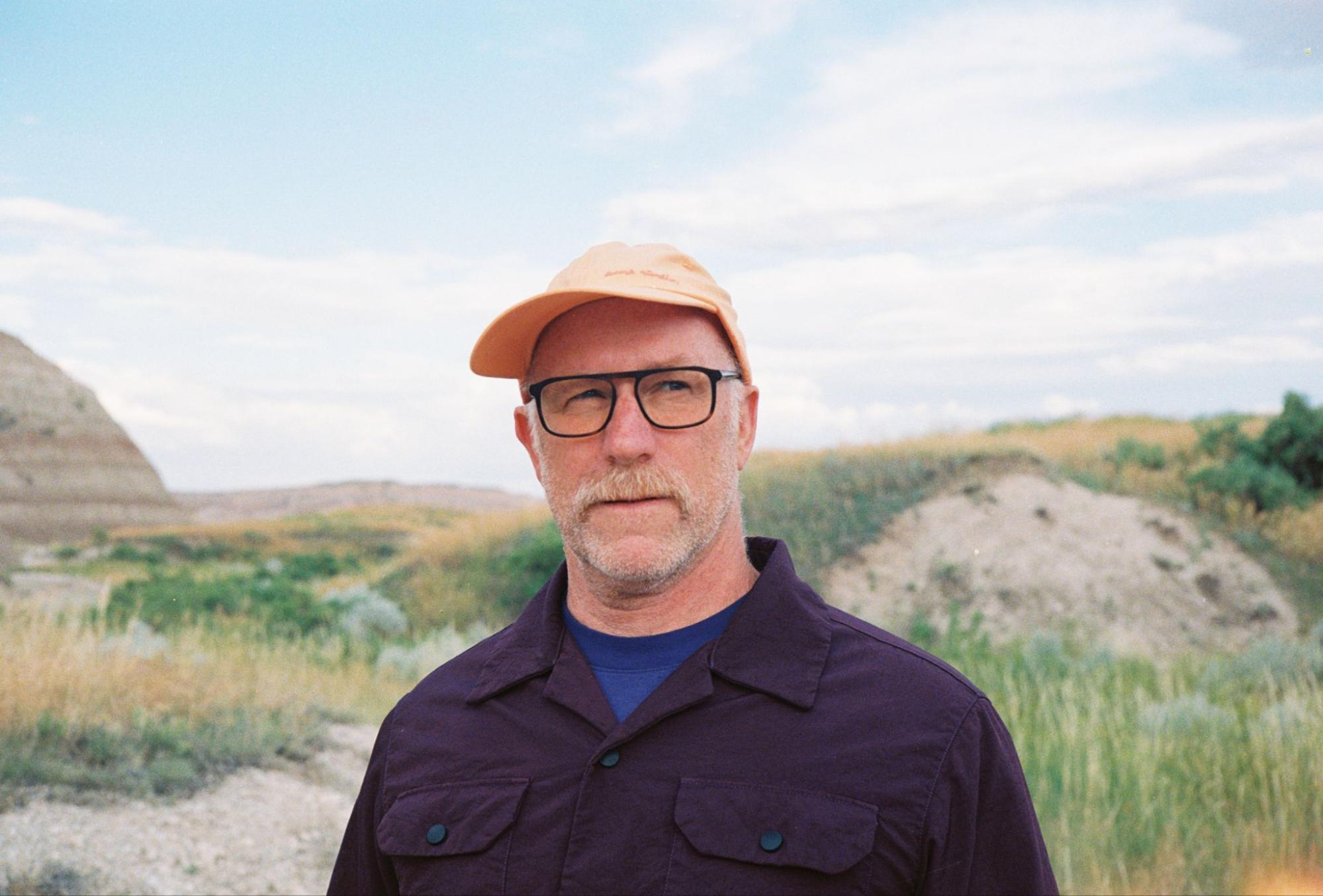
By Mark Dean | Antihero Magazine
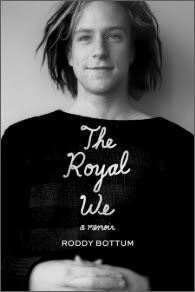
New from Jawbone Press: The Royal We is a poetic survey of a time and a magical city that once was and is no more by musical trailblazer Roddy Bottum, documenting a charged era of bicycle messengers, punk rock, street witches, wheatgrass, and rebellion. The book follows his travels from Los Angeles, growing up gay with no role models, to San Francisco, where he formed Faith No More and went on to tour the world relentlessly, surviving heroin addiction and the plight of AIDS, to become a queer icon.
A deeply personal work of humor, commentary, and reflection, The Royal We is much more than a musical tell-all. There are personal tales of historical pinnacles like Kurt and Courtney, Guns N’ Roses, and recaps of gold records and arena rock—but it’s the testimonies of tragedy, addiction, and a deeply loving recollection of a remarkable scene that make this book so unique and intriguing. Bottum writes about his dark and harrowing past in a clear-eyed voice that is utterly devoid of self-pity, and his emboldened and confident pronouncements of achievement and unorthodox heroism flow in an unstoppable train that’s both captivating and inspirational.
A remarkable portrayal of a creative individual in emergence, a gay man figuring out how to be a gay man, and a detailed look at the nuance of 1980s pre-tech boom San Francisco, The Royal We will be greatly appreciated by people who loved Kathleen Hanna’s Rebel Girl, Patti Smith’s Just Kids, and Hua Hsu’s Stay True.
I recently had the opportunity to chat with Roddy regarding the memoir and his life to date. We chatted for a few minutes before the interview officially started.
“I hope people pick up a book and go on a journey with me. That’s a big ask in today’s world, but that’s what I want.”
Antihero Magazine:
You’re right, obviously you touched there on the drug addiction and also the recovery. What was the most difficult part of translating those experiences into words, putting that down, because it must have been pretty difficult?
Roddy:
Yeah, it was kind of a… Yeah, it was a hard thing to get through, honestly. I mean, when I wrote it, I didn’t think about it too much. I just sort of poured it out onto the page. But it was only recently that I did the audiobook and I had to read it all, and wow, so emotional. And I’m just still right now coming to terms with what I wrote. It’s a really heavy thing. It’s scary to put those things out there. They’re all truthful things that I talk about, but a lot of the things I’d never told anyone before. I told a lot of these stories over and over and over, but there were certain things, like having sex with men in the bushes when I was a young kid, or like heroin stories that I never told anyone. And yeah, it was difficult sort of to come to terms with what those things were.
What guided your decision not to base the book solely about your time with Faith No More? That would be the easy way out, wouldn’t it? I’m writing a book. I was in this big band. Let’s just focus on that.
Yeah, I think it was more interesting when the book became more about San Francisco and the time that it passed. And also, like, I never intended to write a book about Faith No More. There are elements of that band that I find fascinating, but through and through, like sort of, more interesting.
Antihero Magazine:
And again, leading on from that, I mean, obviously you talk about Courtney, Kurt in there. How did you avoid turning it into, again, I guess, a cliched, normal book about celebrities? You know, you seem to have got that balance right, where they’re characters, they appear in it, but they’re not all about them.
Roddy:
Yeah, there were certain decisions I made. I knew from the get-go I wasn’t going to do, like, a tell-all sort of book. So I think I shied away from any sort of, like, reveal that would be considered sort of, like, something for people. Yeah, like, things that I told, things, surprising things, maybe things that people didn’t know. I think my storytelling in the sort of extremities I deal with in a more casual fashion. And just this sort of, like, notion of not using last names, I think also sort of, like, makes it a lot more personable and not so much of an autobiography book.
Antihero Magazine:
And also, we touched on this earlier. So did your background in music and song creation influence the rhythm and structure of the writing? I think you’ve already covered that a little bit.
Roddy Bottum:
Maybe not so much. I mean, when I was a kid, I was really disciplined. My mom kind of, like, and I worked together, like, when I was playing piano. And even from an early age, I would get up early in the morning and, like, practise, like, two hours piano. I think in that sense, like, the discipline of, like, working at something I learned from music. The rhythm, maybe. And I think I’ve always been a songwriter and a lyricist. So I’m always kind of, like, batting around words in my head and the rhythms of words in my head. So in that way, I like the way when words bounce along, you know? So in that way, yeah, I guess it is sort of lyrical, maybe musical stuff.
Antihero Magazine:
Were there any literary influences that shaped your voice? You said you did a lot of reading. Were there any other sort of writers that shaped the way you approached this?
Roddy Bottum:
A little bit, not so much. I know there’s one of our Alexandra O’Dare, A-U-D-E-R. And she wrote a book about her growing up in the Chelsea Hotel. And I became friends with her, and she kind of helped me shape the book a lot. She was really instrumental. Telling a story of her childhood was, like, helpful to me. Also, people like, I like queer authors. I like Dennis Cooper a lot. I like the way that he tells stories. I like the directness of Charles Bukowski in a weird way. He’s kind of a straight, angry writer, but I like what he creates, and I like the way that he tells stories. Also, I read a book by Lydia Lunch that I had never read that was so outrageous. It really struck me as sort of a good starting point.
Antihero Magazine:
The memoir explores themes of chosen family and queer resilience. How do you hope these resonate with readers today?
Roddy Bottum:
Well, in the way that we’re talking, I hope people get enough with us. And it would be an honour just to think that people would read this book. It’s like, I don’t feel that many people read anymore. It’s even difficult for me to read. It’s difficult to read when your phone is right by you. You can always just pick it up and read something current and be sort of dazzled by something going on on social media. It’s hard to read. So, ultimately, I would hope people would just, like, pick up a book and sort of, like, go on a journey with me. I realise it’s a lot to ask, but that’s what I hope for.
Antihero Magazine:
Yeah, I agree with you totally. People seem to, even Kindles, I mean, that’s not reading, is it?
Roddy Bottum:
Well, I guess it is. But yeah, it’s not a book. I got a Kindle. I didn’t like it. Yeah, as I say, I mean, there’s something about a book, just opening that, studying the cover, even reading the back. Yeah, I do a lot of reading. I had a Kindle for a little bit. And one time I was somewhere with it by the side of a pool and I was reading the Kindle. And the thing about a Kindle is, like, you can’t tell what you’re reading. It’s just a plastic thing. And you know who walks by me at the pool? Well, for some reason, Anthony Hopkins. And I was reading Anna Karenina on the Kindle. And I was like, fuck, man, if I would have just had the book, he would have seen I was reading Anna Karenina and he probably would have stopped to chat. Yeah, yeah, exactly.
Antihero Magazine:
What kinds of conversations do you hope The Royal We will ignite within the LGBTQ and artistic communities? Do you think it will?
Roddy Bottum:
I hope it’s provocative, you know, I mean, it’s sort of taboo to talk about, like, having sex with older men as a young person. And I like that I’m putting that out there. It’s controversial and I’m aware of that.
Antihero Magazine:
Sorry, that’s right at the beginning of the book as well. So I’m thinking I got to that bit and he’s starting with that then what’s potentially going to come?
Roddy Bottum:
Yeah. And it’s that I mean, amongst the LGBTQ community, it’s sort of like I would love to generate a sense of understanding in a sort of like generational way. Do you know this English writer, Charlie Porter?
Antihero Magazine:
Not familiar with him, no.
Roddy Bottum:
He just wrote a really great book called Nova Scotia House, and it’s about sort of an intergenerational relationship. And I really love his book. It really creates a beautiful story that kind of is the collision of two generations coming together in a queer way. And the direction of that is really inspiring to me. And I hope young people read my book and I hope old people read my book. Queer people. Yeah.
Antihero Magazine:
Do you see it as a standalone work or could it be the beginning of a broader literary journey? Has it prompted you to sort of think, oh, I really enjoyed that experience. I’m going to do something else. Maybe not about yourself, but maybe on another subject?
Roddy Bottum:
Yeah, I really enjoy the process. It was an interesting sort of way to start writing, writing a memoir, you know, because you’re writing your truth. And today it feels like truth is really important because there’s so many lies in the world and the lies are being screamed so loudly by such arseholes. So it’s an interesting place to start with writing, like writing about myself and trying to be truthful. But I’d love to write. I’m kind of into writing fiction and I love theatre. And I’ve been working on a play for a long time or an opera. And I was thinking about turning it into a musical. And then I’m also thinking like maybe like, yeah, I’d like to write a play.
Antihero Magazine:
What about the book itself? Do you feel that it would translate into another medium like a play?
Roddy Bottum:
Maybe I hadn’t considered that, but possibly. I love plays or movies that sort of are capsulated. Like I love a play about a person’s life. That’s only like maybe a week of that person’s life or something. That’s interesting to me. Or two days or something, you know?
Antihero Magazine:
Again, in the promotional sense, do you see going out maybe and doing a lot of not just musicians go out and they take a book and they do live interaction sort of in front of an audience where they read extracts of the book, maybe expand on some particular themes? You see yourself maybe going down that road or doing something else completely different?
Roddy Bottum:
Yeah, for sure. I’m in Paris right now. Tomorrow I’m going to read my book. It’s my first book event. I’m doing it in Paris because I kind of finished the book in Paris last year. I came to the library here in Paris and I spent like six weeks finishing the book in the library. I went to the library every day and worked on the book. So I came back to Paris to have my first book release party. That’s tomorrow. And I’m going to have a couple friends. This woman Florence Derive, she’s a French painter. She’s going to come and read a poem. And my friend Tabu, who’s an artist, is going to read a poem also. And then I’m going to read from my book and talk a little bit and answer questions. After I do that, then I’m going to come to London and do two appearances in London, one at Rough Trade East on Tuesday and one at Donald Books on Wednesday. And then on Saturday, I’m going to go down to Brighton and do the same thing, read and talk at Resident Music in Brighton.
Where do you live?
Antihero Magazine:
I’m actually just thinking along the same lines. I live in Manchester and I wasn’t aware that you were actually going to the UK with it. I’ll have to get in touch with, have a look at my diary and see if I can get in maybe to one of those. But definitely, yeah, I hadn’t even realised that you were coming to do some promo in the UK.
Roddy Bottum:
It’s down there. It’s going to be fun. Yeah.
Antihero Magazine:
What about then after the book? Have you looked ahead? You seem to be very creative in other formats. Musically, what do you do musically these days?
Roddy Bottum:
You know, right before I got to Paris, I finished a record, tracking a record for with Imperial Team. Yeah, I think it’s my seventh record we’ve made. So that will be mixed and comes out soon. Then I have another band in San Francisco with my friend J.D. Sampson and Michael O’Neill. It’s called Crickets. And we’re going to make a record in January, our second record. That’s a really awesome music project. And my boyfriend and I have a band called Man on Man, and I think we’re going to probably start our third record this winter.
Antihero Magazine:
So still keeping busy?
Roddy Bottum:
Sure.
Antihero Magazine:
That’s brilliant. I see that my time is nearly up and unfortunately I’ve got to go. Thank you very much for chatting.
Roddy Bottum:
Mark, thank you for chatting with me. I liked your questions a lot. Fantastic. Thank you very much. Yeah. Have a great day. Thank you. Bye.
Roddy Bottum is a musician, writer, creator, and actor based in New York City. He started the band Faith No More in San Francisco in the early 1980s and toured the world, selling millions of records. In 1992, he came out of the closet and blew open the spectrum of what being gay in the world of rock music meant. That same year he also formed the critically acclaimed band Imperial Teen, cited as the original pioneers of alternative queer rock. Bottum moved to New York City in 2010 and has performed and created records with Crickets, JD Samson, Nastie Band, and Man on Man, a band with his partner Joey Holman. He’s developing his Sasquatch opera project into a musical in New York City, where he continues to live.