With Tales of Othertime, Stormkeep did something genuinely difficult: they released a debut full-length that felt fully formed, rooted in the mid-90s Swedish and Norwegian black metal tradition without being a mere replica of it, and built a fantasy world vivid enough that listeners actually wanted to return. The Denver quintet earned their reputation quickly, and with it came the weight of expectation. The Nocturnes of Iswylm, their second full-length, doesn’t attempt to repeat the formula. It deliberately dismantles it — and the result is the most conceptually ambitious record in the band’s catalog.
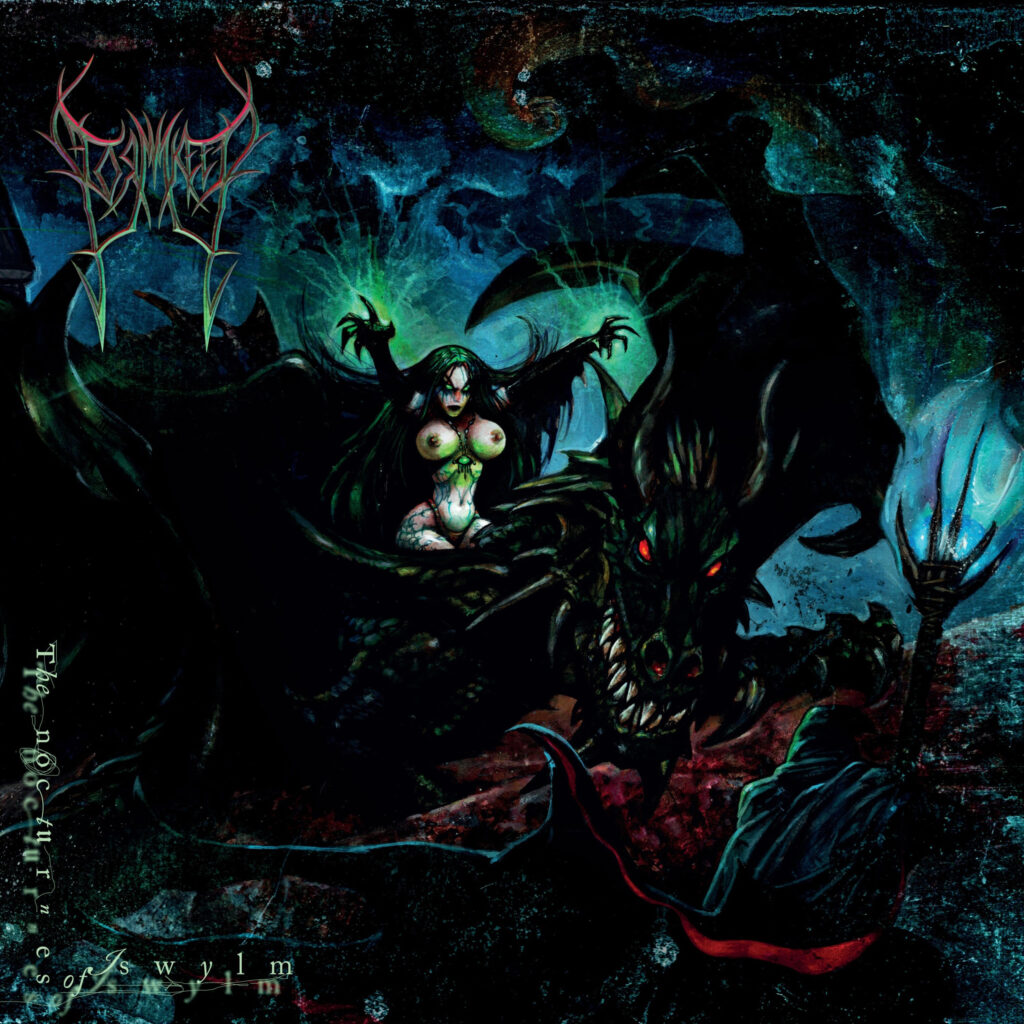
Where Tales of Othertime was expansive and scene-setting, rich with long-form atmospheric passages and the moral clarity of high fantasy, The Nocturnes of Iswylm is its photonegative. The world is the same, but the light has shifted. The Seer — the protagonist of the first album, an essentially good figure fighting against darkness — has now become the thing he was fighting. The album is set in the cave, the lowest point of Joseph Campbell’s hero’s journey, where the protagonist must confront what they’ve become. That framing isn’t window dressing. It’s structurally embedded in every compositional decision the band made.
The thematic pivot to vampyric darkness is the album’s most significant departure, and Stormkeep are too self-aware to let it slide into genre posturing. Their Nathaarian — the band’s term for their particular strain of fantasy vampire — isn’t glamorized. The reference points run closer to Nosferatu and the original Hammer films than to Anne Rice’s velvet-curtained decadence: a creature consumed by a desire that destroys rather than seduces, barely in control of its own nature. It’s a portrait of addiction wearing medieval armor. The lyric from “Imperious Sanguine Eroticism” — “Oh Succubus / Spirit of Saturnalia / Cursed Forever / In Waltz with Serpent’s Grip” — captures the dynamic precisely: the erotic pull is immediately subsumed by entrapment. In “Carnal Tapestries of Nailtorn Flesh,” the narrator’s declaration — “This carnal temptation will control me no longer” — reads less like triumph than desperate assertion. The horror on The Nocturnes of Iswylm is internal. The Seer knows what he’s becoming. He simply cannot stop it.
That conceptual weight gives the album a psychological coherence that most symphonic black metal records don’t attempt, let alone achieve. The band stripped out interludes entirely this time — a deliberate choice that transforms the listening experience into an unbroken descent. There is no room to surface. The riff language has expanded well beyond the G minor / D minor axis of Tales of Othertime, with minor seconds and tritones pushing the harmonic vocabulary into more genuinely unsettling territory. The symphonic elements, rather than merely decorating the riffs, now build architecture around them — a distinction that matters, and one made possible by the decision to replace synthesized orchestration with live strings. Violinist, violist, and cellist Andrea Morgan brings a warmth and organic unpredictability to the arrangements that no keyboard patch can replicate.
The production team signals that Stormkeep were playing in serious company. Michael Zech — whose résumé spans Secrets of the Moon, Dark Fortress, and The Ruins of Beverast — understands how to give atmospheric black metal both mass and definition. Mastering by Arthur Rizk, whose work with Blood Incantation and Worm demonstrates fluency in the underground’s more demanding audiophile flank, ensures the record holds up under close listening. The result is a record that breathes even as it tightens around the listener’s throat.
“The Taste of Immortal Blood” establishes these parameters immediately, the symphonics and tremolo runs interlocking with a precision the debut didn’t always maintain at pace. “Imperious Sanguine Eroticism” demonstrates the sharpened songwriting economy — key modulations that earn their place, clean vocal passages handled this time entirely by Otheyn Vermithrax rather than a guest, which is the right call given how personal the lyrical register has become. “Ballad of a Fallen Star” draws from the goth-adjacent atmosphere of Fields of the Nephilim and Dead Can Dance, and in context functions not as a deviation but as the emotional fulcrum the album’s second half needed.
The Nocturnes of Iswylm isn’t Tales of Othertime II, and it’s a stronger statement for refusing to be. The Seer has become the villain, and the album is the richer for it — Stormkeep‘s most fully realized work to date. “Stormkeep have descended into the cave and returned with something that earns every shadow it casts.”
STORMKEEP is:
Otheyn Vermithrax: Vocals, guitar, keyboards, drums
Apokteino: Guitar
Nebula Husk: Bass
Lord Dahthar: Keyboards
Find Stormkeep Online at:
https://tr.ee/vesperian_stormkeep
US web shop: https://metalblade.indiemerch.com/collections/stormkeep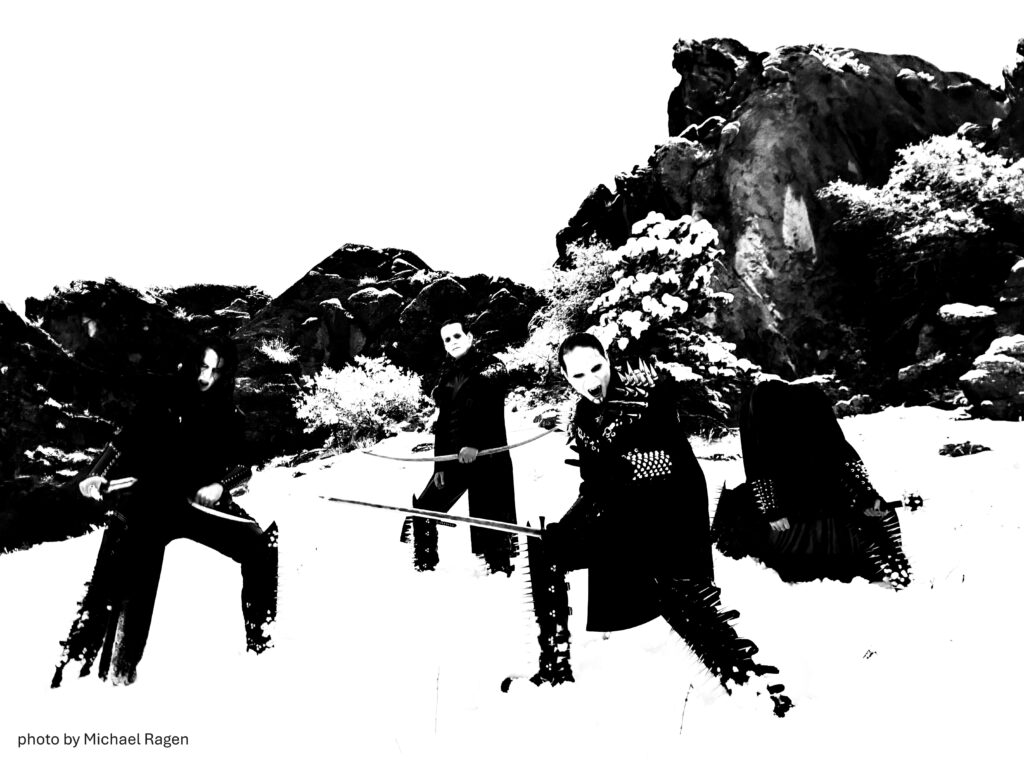
Review
Overall - 8
8
Stormkeep's second full-length is a deliberate and confident pivot: darker in tone, tighter in construction, and more psychologically complex than the high-fantasy world-building of Tales of Othertime. The Nocturnes of Iswylm follows The Seer's descent into the very evil he once fought, framing vampyrism as addiction and inherited corruption rather than gothic glamour — and the music matches that weight. Live strings from Andrea Morgan replace the synthesized orchestration of the debut, producer Michael Zech gives the record both mass and definition, and Arthur Rizk's mastering ensures it holds up under close listening. The result is symphonic black metal that earns its conceptual ambition.